A customer-facing Internet presence is just about mandatory for modern businesses. Websites are essential instruments for companies venturing into the eCommerce space or simply wishing to provide customers with timely information about their products and services. The quality and performance of business websites can be the difference between an organization’s success and failure.
While websites can certainly be hosted and managed using in-house hardware and personnel, a popular solution is for companies to engage a web hosting solution from a cloud service provider (CSP). Going to the cloud offers a simple, fast, and efficient method of hosting a website without incurring any capital expenditures or expending technical intellectual capital.
Organizations searching for a cloud-based web hosting solution have multiple choices available to them. Two of the most popular choices are to use either a shared or a dedicated server. Each type of server has advantages and disadvantages that make them suitable to meet specific business objectives. Let’s look at what to expect when going with one of these cloud-based hosting alternatives.
A shared server is a single physical server that is used to host multiple websites. A cloud provider can maximize its hardware investment by hosting hundreds or thousands of websites on one server. Customers can quickly implement a website using a shared server with no upfront investment in hardware and little technical expertise.
Using a shared server can be likened to traveling via public transportation in that its cost-efficiency is achieved by using pooled resources. Sharing resources with other customers can be frustrating at times and result in degraded levels of performance.
The limited resources of the underlying physical server are being used to simultaneously address the changing needs of many clients. At times, resources may not be available to efficiently handle a spike in website traffic or exceptionally large data transfers. The tradeoff for this inconvenience is a lower price for web hosting services.
Some companies may find that a shared server provides the necessary performance and availability to meet business objectives. The main advantages of going with a shared server solution are:
There are also some aspects of a shared server that may not mesh with business requirements. If these factors are important to your business, a shared server may not be appropriate. The disadvantages of a shared server include:
A dedicated server employs the resources of a single physical server to host a company’s website. It eliminates the use of pooled resources that come with a shared server. An organization does not need to worry about the impact of other customers on resource availability or server performance.
Businesses that use dedicated servers to host their websites can more easily determine if they need to scale up to handle an evolving workload. Without other tenants vying for resources, a client with a dedicated server can identify areas that need to be addressed purely based on their requirements. Things like bandwidth, memory, or CPU power can be upgraded without being concerned about sharing them.
A dedicated server eliminates many of the problems that can plague users in a shared environment. Some of the advantages of a dedicated server are:
The disadvantages of using a dedicated server include:
Company decision-makers need to carefully consider the goals of their business and how their website will be used. The selection should be made based on the type of data being processed, the expected amount of traffic, the performance expectations, and the resources a company wants to devote to web hosting.
Smaller companies or those just starting are the most likely customers for a shared server solution. Websites used to simply present information may not be as sensitive to inconsistent performance as those running an online store. Companies with small or inexperienced tech teams can take advantage of the streamlined management of shared servers provided by CSPs.
Organizations starting with a shared server solution can always migrate to a dedicated machine as their needs change. Businesses that can withstand performance and resource fluctuations without a substantial impact will find the less expensive price tag of a shared server very attractive.
Businesses that rely more heavily on their websites will benefit from the greater capabilities of a dedicated server. They can exercise elevated control over the server’s configuration and performance settings to meet their needs. These same factors also apply to companies that process sensitive information and need enhanced security.
The increased performance and flexibility of a dedicated server come at a cost. A vendor is providing a complete machine instead of just a slice of a shared environment. That demands a higher price tag. Customers also need to be more involved in the maintenance and configuration of a dedicated server than when using a shared solution.
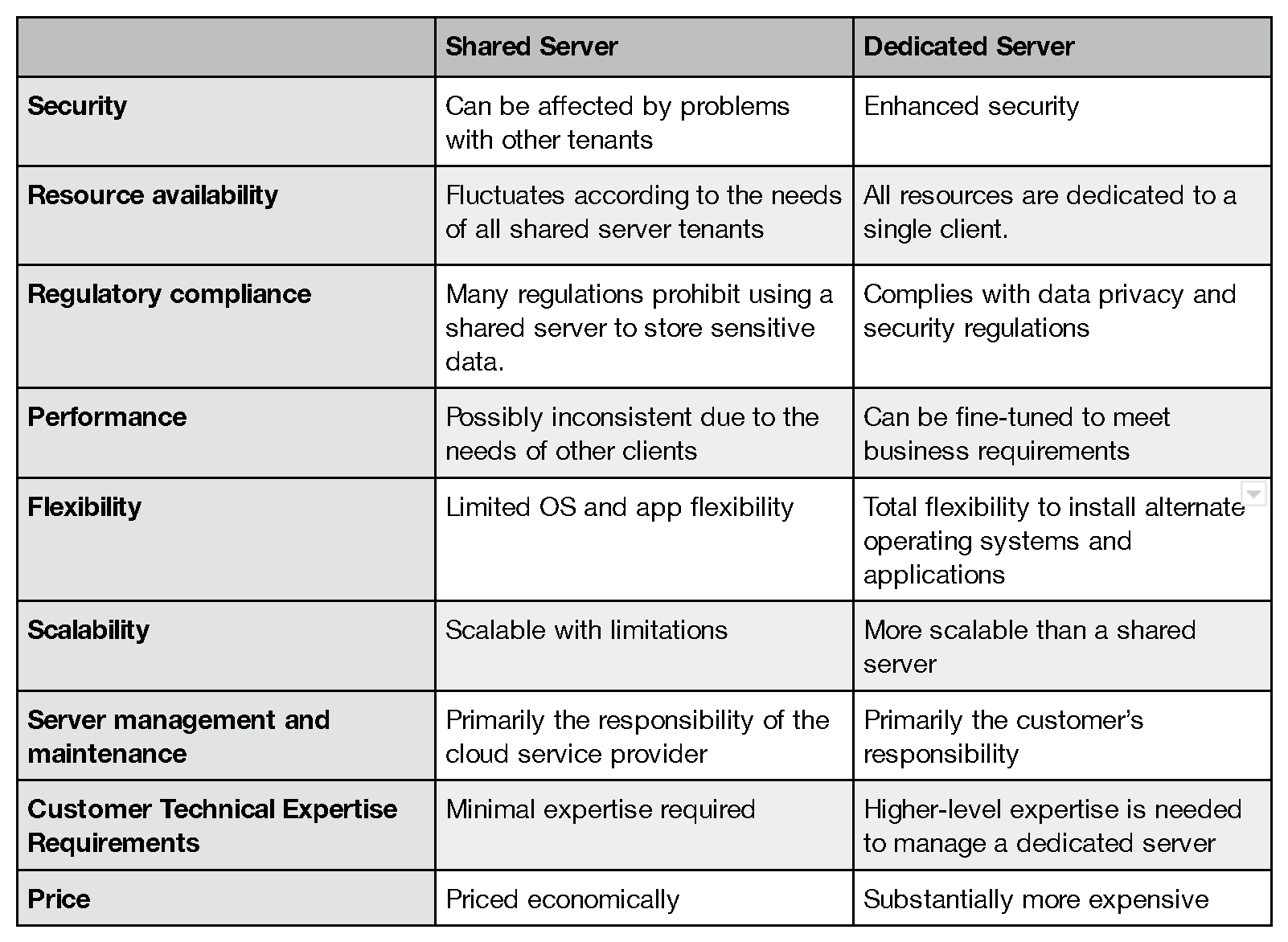
Business objectives and goals will determine if the higher price and additional responsibility justify a dedicated server approach. This table summarizes the differences between a shared and dedicated server web hosting solution.
Whichever method a company decides on to host their websites, working with a reputable CSP can help assure a successful endeavor. If you are interested in a shared solution, look for a provider that manages its shared server environment efficiently and does not oversell its resources at the expense of its customers’ website performance. When managed correctly, a shared server environment can meet the needs of many organizations.
If you are looking at dedicated servers, some comparison shopping is probably in your future. CSPs want your business and have widely varying offers that can address your business requirements. Take the time to find one that will work with you to ensure your website meets your goals.
By Robert Agar
Robert is a regular contributor and blogger for Atlantic.Net living in Northeastern Pennsylvania who specializes in various information technology topics. He brings over 30 years of IT experience to the table with a focus on backup, disaster recovery, security, compliance, and the cloud.